
ChatGPT Ads turns on hashed matching Aug 17
 By
By 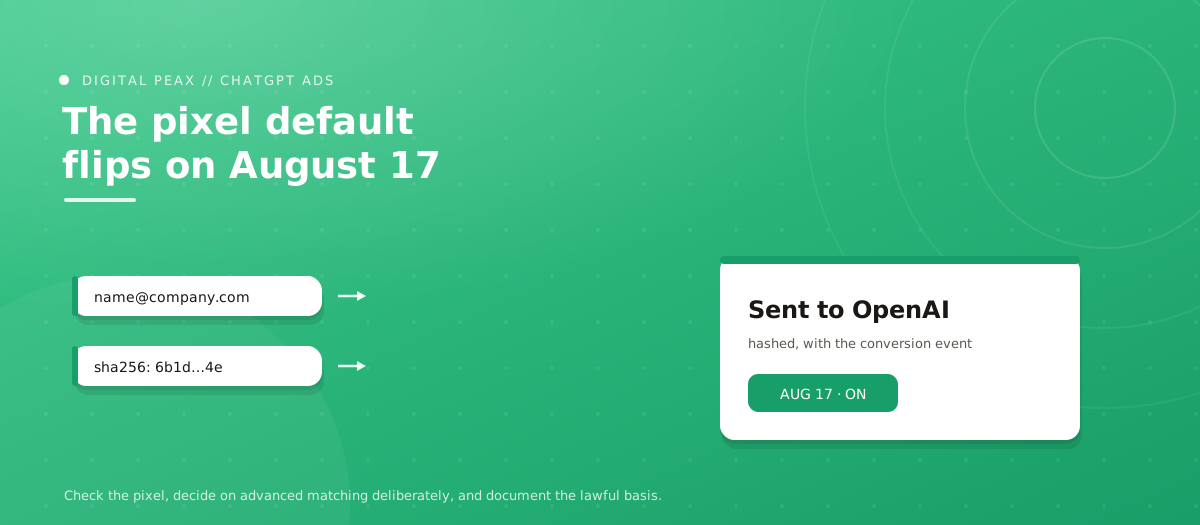
OpenAI shipped a batch of ChatGPT Ads changes on August 7. Most of it is the platform catching up to table stakes: conversion-optimized bidding, product carousels, dynamic URL parameters. One item has a deadline attached and belongs on your calendar rather than your reading list: automatic advanced matching becomes the default on existing pixels on August 17, unless you turn it off first.
We put real budget on this surface early and wrote up a field report back in May. Since then OpenAI has kept shipping, and the August 7 batch is the biggest one yet: conversion-optimized bidding, product carousels, dynamic URL parameters, more measurement integrations, and a change to how the web pixel matches conversions. Most of it can wait for your reading list. The pixel change cannot, because it has a date attached.
What automatic advanced matching actually does
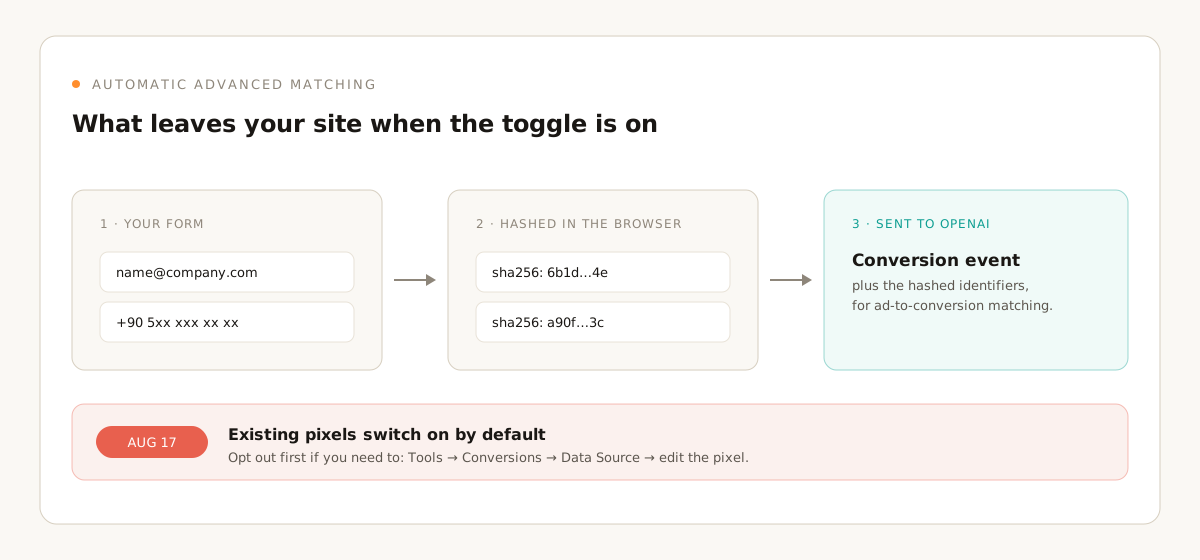
It reads identifiers users type into forms on your site, hashes them client-side, and sends them to OpenAI alongside the conversion event, so more conversions can be matched back to ads. In practice that means email addresses and phone numbers, hashed, leaving your site and arriving at a third party. It is now the default for newly created web pixels, and existing pixels will have it enabled automatically on August 17, 2026 unless you turn it off first. That is PPC Land's reporting, corroborated by Search Engine Land the same day.
If you have implemented enhanced conversions in Google Ads or advanced matching in Meta, the mechanism will be familiar. The difference is that this one is being switched on for you, on an existing pixel, on a date, without a fresh implementation decision from your side.
The opt-out path is short: Tools, then Conversions, then Data Source, then edit the pixel and disable the feature. Ten minutes per account. Do it before August 17 or accept the default deliberately.
The consent question is yours, not OpenAI's
This is the part worth being blunt about. ChatGPT Ads is not currently available in continental Europe, so GDPR is not the immediate blocker for most accounts on the platform. UK advertisers operate under an equivalent consent regime, and that does apply.
The principle holds regardless of jurisdiction: an advertiser operating where consent requirements exist remains responsible for establishing a lawful basis for sending hashed form data to a third party, no matter which way the platform's default toggle points. A default is not a legal basis. If your consent banner does not cover sending hashed personal identifiers to OpenAI, and your privacy policy does not name it, then leaving the toggle on is a decision you have made without the paperwork to support it. It is the same discipline we describe in our Consent Mode setup: the banner has to reflect what actually leaves the site.
For agencies this is a client conversation, not an internal one. The account holder carries the exposure. Send the note.
The rest of the release, briefly
- oCPC campaigns, in beta. Conversion-optimized cost per click: you pay per click, the system optimizes toward conversions. You can bulk-clone from existing CPC campaigns, which makes a controlled test cheap to set up. This is the change most likely to affect your numbers in a good way, and it is the one nobody is talking about because it has no deadline.
- Multi-product carousels, in testing. Several items in one ad unit for product feed campaigns. Digiday covered the launch. For ecommerce accounts this is the first ChatGPT Ads format that looks structurally like Shopping.
- Dynamic URL parameters. Campaign, ad group, and ad IDs now auto-append to landing page URLs. Small feature, disproportionate value: it is what makes ChatGPT Ads attributable in your own analytics rather than only in OpenAI's interface. Turn it on.
- Measurement and diagnostics. Triple Whale, Sonar Optimize, and Hightouch joined the measurement integrations, and pixel validation in Ads Manager now names specific errors with remediation guidance, which is a genuine improvement over guessing.
- Geographic expansion. Brazil and Mexico within the week.
Sizing the channel honestly
Before anyone reallocates budget on the strength of a carousel format, the traffic numbers deserve a caveat. The most useful dataset available is a Previsible study covering 6.77 million LLM-driven sessions across 166 GA4 properties, running from November 2024 through May 2026. ChatGPT accounted for 92.4% of trackable LLM referral traffic as of May 2026. Perplexity had declined 61% from its March 2025 peak, and Copilot had collapsed 96% from its August 2025 peak. So if you are working on LLM referral traffic at all, ChatGPT is effectively the whole channel.
But the same study puts publisher penetration at 0.11% against more than 120 million organic sessions. LLM referral remains small next to search. It also found 28.8% of ChatGPT traffic landing on internal site search results pages, which suggests the models are still poor at picking the right page, and which is a fixable technical problem on your side. Nobody has published conversion rate by LLM platform yet, so treat performance claims about this channel as unverified. We covered how to see this traffic at all in measuring AI-search traffic.
The honest read: ChatGPT Ads is worth a structured test on ecommerce and considered-purchase accounts, funded from a test budget, not from your Search line. The pixel decision is the only part with a deadline, so make that one first.
What to do this week
- Open every ChatGPT Ads account and check the pixel before August 17: Tools, Conversions, Data Source, edit pixel. Decide on advanced matching deliberately rather than by default.
- If you leave it on, document the lawful basis. Confirm the consent banner covers third-party transmission of hashed identifiers and that the privacy policy names OpenAI. If it does not, turn it off until it does.
- Enable dynamic URL parameters. Without campaign and ad group IDs in the URL you cannot reconcile ChatGPT Ads spend against your own analytics.
- Clone one CPC campaign into oCPC as a controlled test. Same creative, same feed, same budget, two weeks. It is the cheapest read you will get on whether the bidding is any good.
- Check where LLM traffic lands. If a meaningful share is hitting your internal search results pages, that is a routing and internal linking problem you own, not a platform limitation.
Checking the pixel takes ten minutes. Deciding whether the default is defensible for a specific account, and documenting it, is the real work, and it is exactly the kind of call our analytics services make with clients.
Sources
- PPC Land: ChatGPT advertisers face 10 days to opt out of automatic advanced matching
- Search Engine Land: ChatGPT Ads rolls out oCPC campaigns, AAM and product carousels
- Search Engine Roundtable: OpenAI ChatGPT Ads updates
- Digiday: OpenAI brings product carousels to ChatGPT Ads
- Search Engine Land: ChatGPT AI referral traffic sessions data (Previsible)
The Peax Brief
One sharp idea on data-driven growth, every other week. No spam, unsubscribe anytime.