 Digital Peax
 ChatGPT Ads: an early field report
 By
By 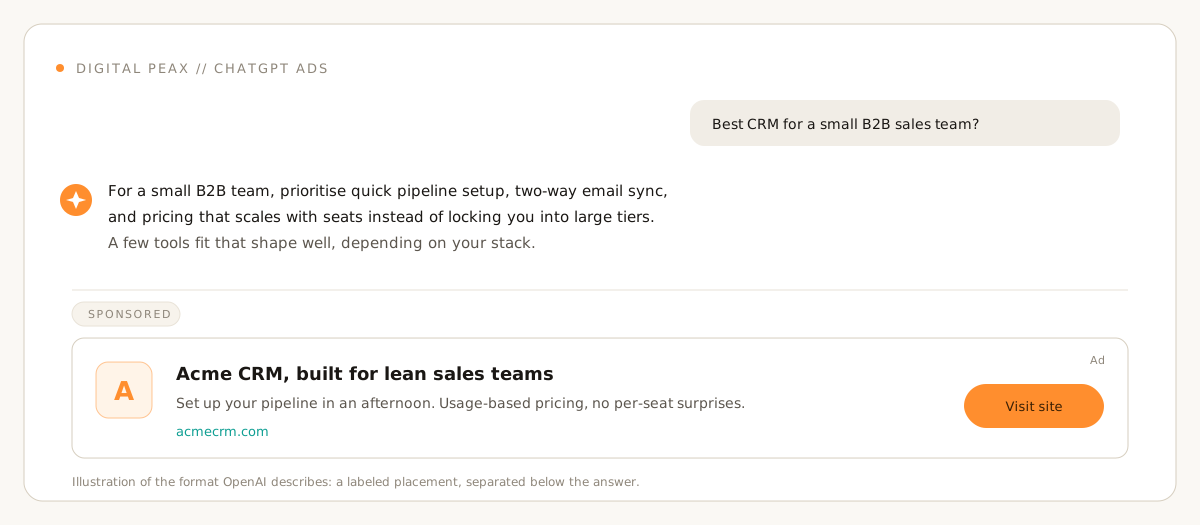
We put real budget into ChatGPT Ads as soon as the self-serve manager opened, partly out of curiosity and partly because clients were already asking. This is what the surface actually is, how you buy it, and whether it earned its place in the plan.
First, the honest caveat. This is an early surface that is still changing month to month, so treat everything here as a field note rather than a finished playbook. What follows is what OpenAI has confirmed publicly, plus what we saw spending against it.
What ChatGPT Ads actually are
A ChatGPT ad is a sponsored placement that appears below the assistant’s answer. OpenAI describes it as clearly labeled and visually separated from the response, which matches what we see in the product. It is not an answer that has been bought, and it is not a link stuffed into the model’s text. It sits underneath, after the model has finished, as OpenAI explains in Testing ads in ChatGPT.
The three rules OpenAI set, and why they matter to you
OpenAI has been unusually explicit about the guardrails, and they shape how you should plan. From its approach to advertising and the Ads in ChatGPT help page:
- Ads do not influence answers. The model generates its response independently, and only then does the ad system decide whether a relevant placement should appear. You cannot buy your way into the answer itself.
- Ads are separate and clearly labeled. The placement is marked as sponsored and kept distinct from the response.
- Conversations stay private from advertisers. OpenAI states that advertisers do not get access to chats, chat history, memories or personal details, and receive only aggregated, non-identifying performance data such as views and clicks.
That last point is the one performance marketers need to sit with. You are not getting user-level data back. Plan around aggregates.
Who sees them, and how you buy
At launch the placements show to people on the free and lower-cost tiers, while paid Plus, Team and Enterprise users keep an ad-free experience. For a B2B advertiser that matters: a meaningful share of the audience is exploring, learning and comparing, which is upper-funnel behavior, not bottom-of-funnel intent.
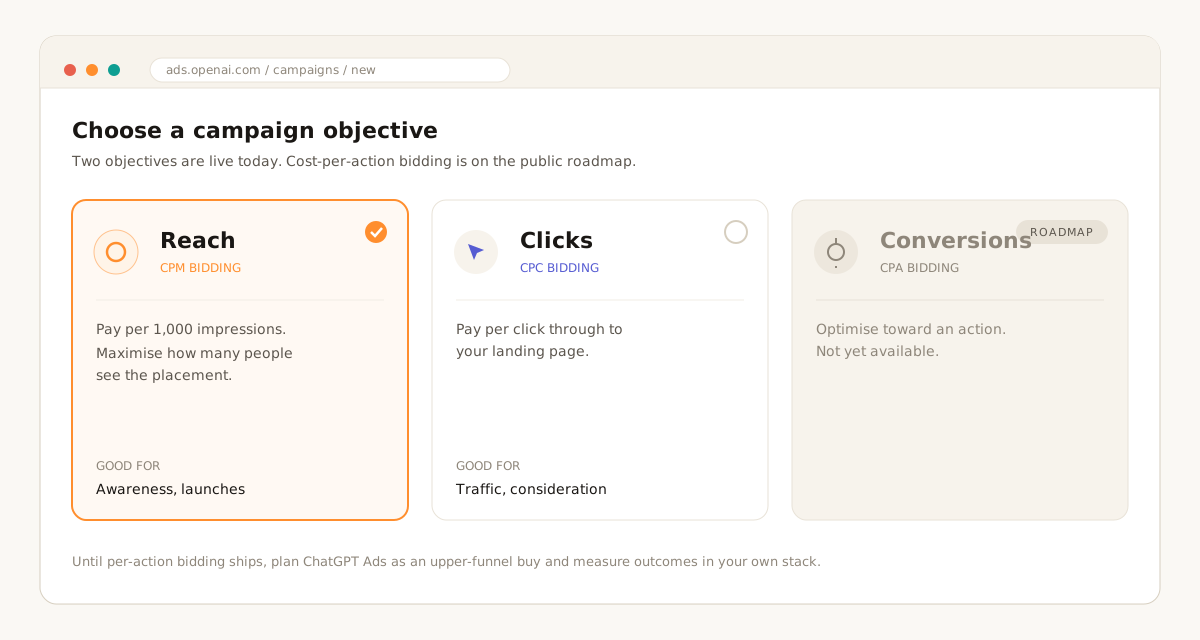
The Ads Manager currently offers two objectives. Reach is bought on a cost-per-thousand-impressions basis, and Clicks is bought on cost-per-click. Cost-per-action bidding, the thing most direct-response teams actually want, is on OpenAI’s public roadmap rather than live today. There is no public rate card, and the cost figures floating around the industry are early and inconsistent, so we are not going to quote a CPM as if it were settled. We treated our spend as a test budget, not a core line item, and bid for clicks so we at least got people onto a page we controlled.
The measurement catch
Here is where a performance team has to be disciplined. Because reporting is aggregated and no chat-level or user-level data crosses over, you cannot lean on the platform to tell you what converted. It tells you impressions and clicks. Everything after the click has to be measured in your own stack.
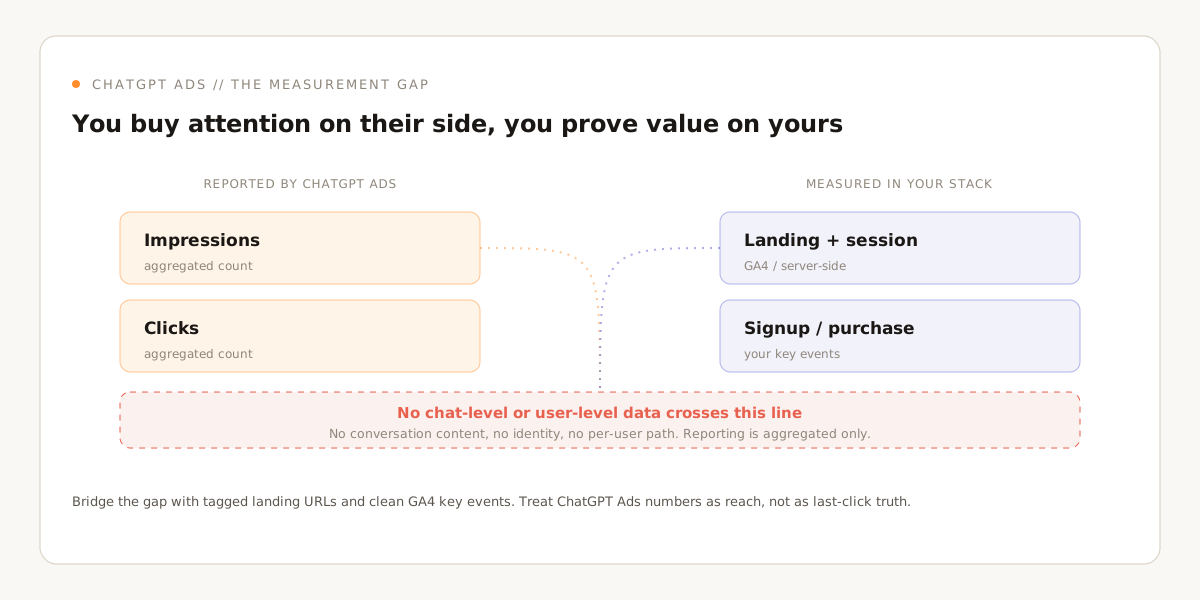
Our setup was deliberately boring: dedicated landing URLs with campaign tags, clean GA4 key events on the actions that matter, and server-side tagging so the click-to-signup path survived. Without that, ChatGPT Ads spend is a black box. With it, you can at least see cost per click and downstream behavior, even if you cannot pull a tidy last-click conversion number out of OpenAI.
Our take after the first runs: ChatGPT Ads is a reach and consideration buy today, not a performance channel. If you need cost-efficient acquisition this quarter, it is not there yet. If you want to be in front of a large, engaged audience early while competition is still thin, a measured test is defensible.
Where it fits the plan
We are keeping a small, ring-fenced test budget on it, treating the results as upper-funnel, and watching the roadmap for cost-per-action bidding. The day CPA optimization and richer reporting arrive, the calculus changes and we will revisit. Until then, spend like it is an experiment, measure like it is your own funnel, and do not let the novelty talk you into a bigger number than the data supports. The rules of the channel are still being written, and the advertisers who learn it cleanly now will buy it well later. If you want a second, disciplined pair of eyes on a test budget like this, that is exactly the kind of work our performance marketing agency takes on.
Sources
The Peax Brief
One sharp idea on data-driven growth, every other week. No spam, unsubscribe anytime.