 Digital Peax
 Consent Mode v2 without nuking your data
 By
By 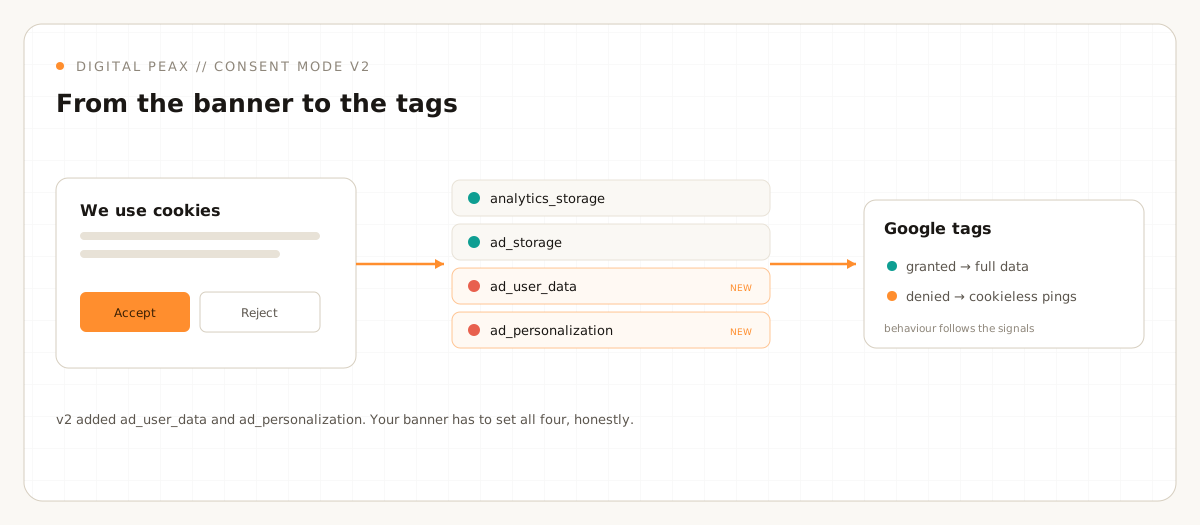
In the EU, your cookie banner is not paperwork bolted onto analytics. It is part of the data pipeline, and Consent Mode v2 decides how much measurement survives a rejected banner. Done well, you stay compliant and keep most of your signal. Done badly, you throw away half your data for no reason. The setup we use looks like this.
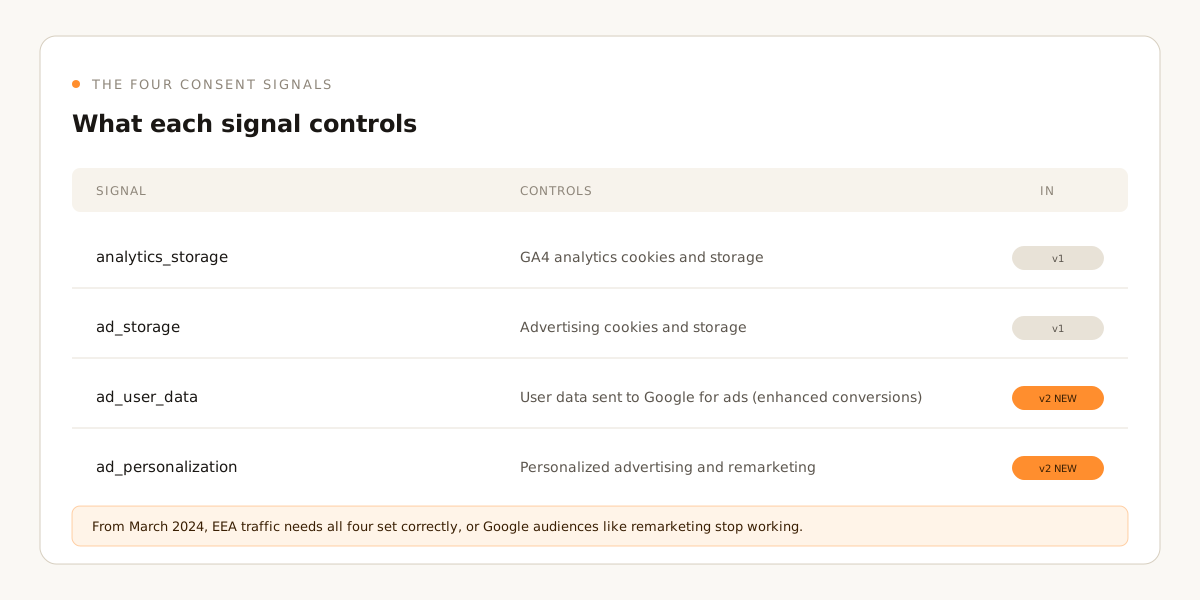
Google introduced Consent Mode v2 and, from March 2024, requires it for sites that serve ads to or measure users in the European Economic Area. Without it, features that depend on Google audiences, like remarketing and Customer Match, stop working for EEA traffic. So this is not optional if you advertise into Europe.
The four signals
Consent Mode communicates user choices to Google tags through consent signals. v2 added two to the original pair, for four in total. Google’s EEA consent mode update documents them:
- analytics_storage controls analytics cookies and storage, the GA4 side.
- ad_storage controls advertising cookies and storage.
- ad_user_data, new in v2, governs whether user data may be sent to Google for advertising, covering things like enhanced conversions.
- ad_personalization, also new, governs whether data may be used for personalized advertising such as remarketing.
Your consent banner has to set all four honestly, based on what the user actually agreed to. Getting these wrong is the difference between compliant measurement and either a privacy problem or needlessly blocked data.
Basic versus advanced, and why it decides your data loss
There are two ways to wire Consent Mode, and the choice has a big effect on how much you keep.
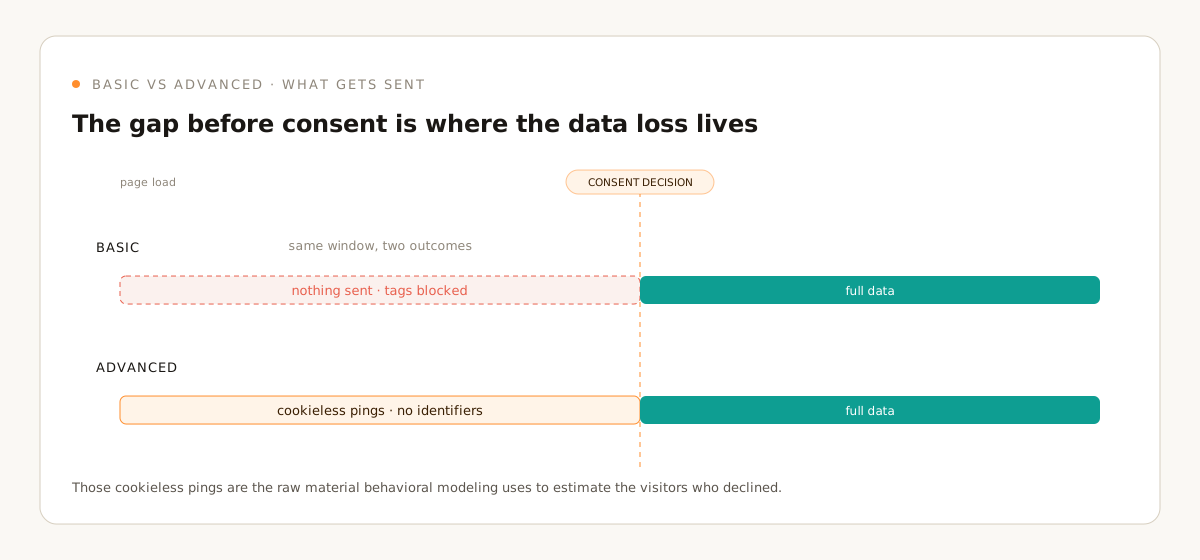
- Basic blocks Google tags entirely until a user consents. Clean and simple, but every visitor who declines or ignores the banner contributes nothing, and Google has no signal to model from. You simply lose them.
- Advanced loads Google tags before the banner and, while consent is denied, sends cookieless pings that carry no identifiers. When the user consents, full data flows. Those cookieless pings are what make the next part possible.
Behavioral modeling: getting some of it back
With advanced consent mode, Google can use behavioral modeling to estimate the behavior of users who declined, based on the patterns of similar users who accepted. It is not invented data; it is a model trained on your consented traffic, filling the gap the banner created. Google’s behavioral modeling documentation lists the eligibility thresholds, and they are real gates: among them, at least 1,000 events per day with analytics_storage denied over a seven day window, and at least 1,000 daily users sending consented events. Below that volume there is nothing to learn from, so smaller sites should expect less recovery.
The takeaway: basic consent mode is the easy setup that quietly costs you a chunk of your data. Advanced consent mode plus behavioral modeling is slightly more work and recovers a meaningful share of it, legally. On EEA traffic, that gap is the whole game.
How we set it up
- Use a certified consent management platform that supports Consent Mode v2 and sets all four signals.
- Choose the advanced implementation so denied traffic still sends cookieless pings.
- Make sure tags load before the banner, which is what makes the pings and modeling work.
- Verify the signals actually fire as expected, then watch your reports for modeled versus observed users.
The goal is not to squeeze consent out of people. It is to honor their choice precisely and still measure honestly within it. Consent Mode v2, set up in advanced mode, lets you do both, which is exactly what a regulated, EU-facing business needs. Wiring it correctly, alongside the rest of your tracking, is standard scope for our analytics services.
Sources
The Peax Brief
One sharp idea on data-driven growth, every other week. No spam, unsubscribe anytime.