 Digital Peax
 Did ChatGPT send that lead? Measuring AI-search traffic
 By
By 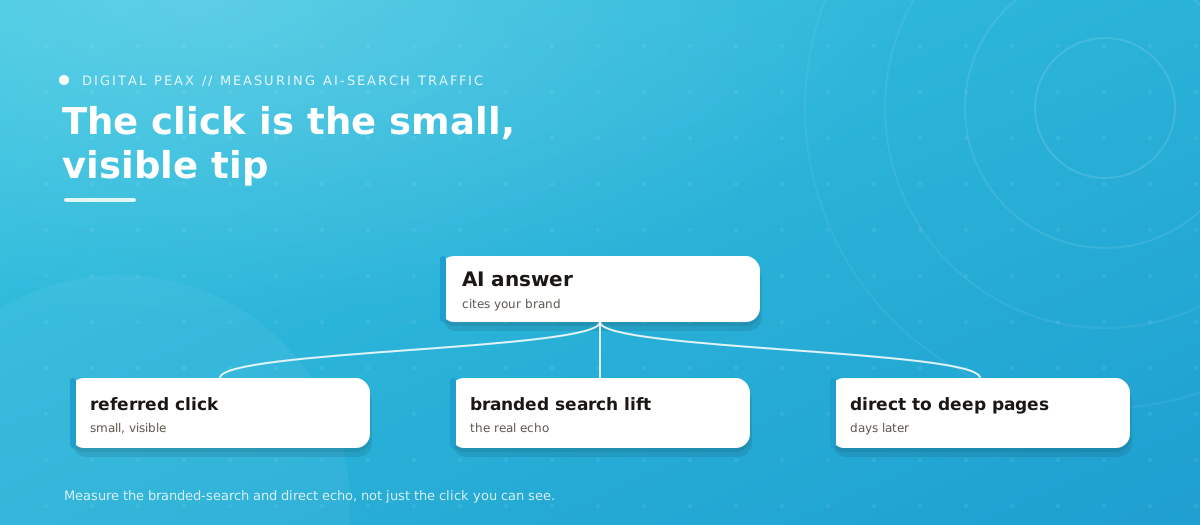
Ask anyone whether ChatGPT and Google’s AI Overviews are sending them business and you will get a shrug. The visitors are real, but they arrive with almost no referrer, land in the “direct” bucket, and quietly inflate a number nobody can explain. Getting cited by an answer engine is worth nothing if you cannot see it. Separating that traffic, watching it, and giving it honest credit is the work this gets into.
We wrote earlier about how to get cited by ChatGPT and AI Overviews. This is the inevitable sequel, because getting cited raises a harder question: how do you know it happened, and what did it bring you? AI answers are a genuinely awkward traffic source. They send people who are often further along and better qualified than a casual searcher, and they send them with the referrer stripped, no tidy keyword, and nothing for last-click attribution to grab. Left alone, that traffic lands in "direct" and your AI work looks like it did nothing.
Why the traffic hides
Two things conspire. First, much of an AI answer's value never produces a click at all: the user reads the synthesised answer, sees your brand cited, and moves on better-disposed toward you but without visiting. Google itself frames AI Overviews as a way to get the gist without clicking through. Second, when people do click, or look you up afterwards, assistants often pass no usable referrer, so the session shows up as direct or unassigned. The work is real; the attribution is missing.
Capture what you can see
Some AI traffic is visible, and you should ring-fence it before chasing the invisible kind. A few moves get you most of the way:
- Build an AI-assistant segment in GA4. Create channel-grouping rules or an exploration that buckets the known assistant referrers that do pass through (chatgpt.com, perplexity.ai, the Gemini and Copilot hosts) into one comparable "AI assistants" source instead of scattering them through referral and direct.
- Tag every link you control. Anywhere you can append parameters (feeds, partnerships, anything you submit), use clean UTMs so the click is unambiguous when it does land.
- Watch landing pages, not just sources. A deep internal page suddenly taking direct traffic it never had before is usually an answer engine citing it. Sort direct sessions by landing page and the pattern shows.
Measure the echo, not just the click
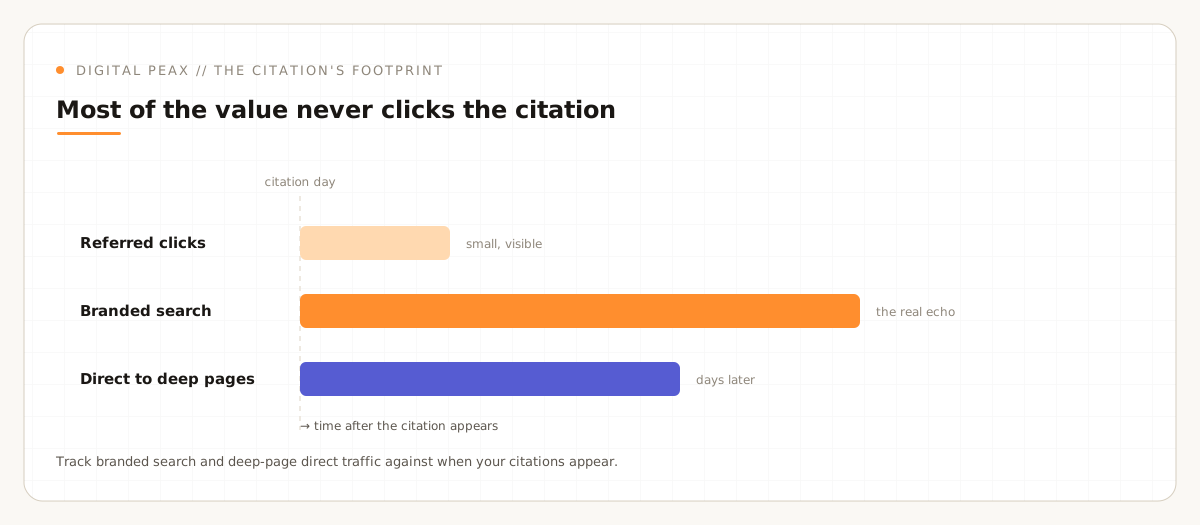
The most reliable signal that AI search is working is indirect, and it is the one most teams never connect. When an answer engine cites you, a share of those people do not click the citation; they look you up afterwards. So the footprint of getting cited is a rise in branded search and in direct visits to deep pages, lagging the citation by days. Track branded-query impressions and clicks in Search Console as a time series, watch direct traffic to the specific pages that tend to get cited, and line them up against when your citations appeared. You are looking for correlated lift, not a single tidy click path.
This is the same logic as offline-to-online or brand-lift measurement: when the direct path is unobservable, you prove the channel by the demand it creates downstream. It is less satisfying than a last-click number, and far more honest than crediting "direct" for work an answer engine did.
Keep the platforms separate
"AI search" is not one thing. A citation inside Google's AI Overviews behaves differently from a mention in ChatGPT, which differs again from Perplexity, which lists its sources prominently. Some drive visible clicks; some drive almost none. Bucket them separately wherever you can, because the optimisation that earns a citation, and the value it returns, is not the same across them. Treating them as a single "AI" line hides exactly the differences you need to act on.
If you keep one idea from this: the click is the small, visible tip of AI-search value. Measure the branded-search and direct-traffic echo it creates, or you will keep crediting "direct" for what ChatGPT did.
Wiring it up
- Define an "AI assistants" channel in GA4 so the visible referrals stop hiding in direct.
- Tag every link you control, and audit direct traffic by landing page for citation fingerprints.
- Track branded search and deep-page direct traffic as a time series against your citation activity.
- Keep each answer engine in its own bucket rather than one blurred "AI" total.
- Judge GEO on that combined picture, the same way you would judge any upper-funnel channel.
It will not hand you a perfect last click, because there is not one to give. What it does give you is the ability to say, with evidence, whether being cited by AI is moving your business, which is the difference between investing in GEO and merely hoping it works. Building that measurement layer, and the GEO work behind the citations, is what our SEO and GEO services do day to day.
Sources
The Peax Brief
One sharp idea on data-driven growth, every other week. No spam, unsubscribe anytime.