 Digital Peax
 GEO 101: how to get cited by ChatGPT and AI Overviews
 By
By 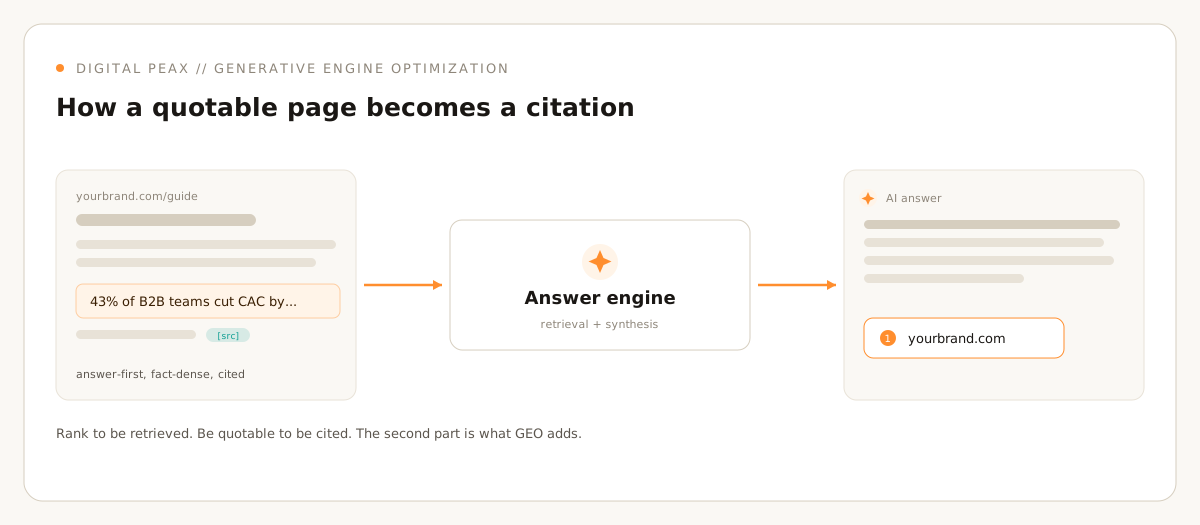
Every founder I talk to wants the same thing now: to be the source ChatGPT quotes, not the link buried under the answer. The good news is that there is real research on what makes AI engines cite you, and Google has said in plain terms what it does and does not reward. Consider this the evidence-based version, minus the hype.
Generative Engine Optimization, GEO, is the practice of shaping your content and site so that AI answer engines like Google’s AI Overviews, ChatGPT, Perplexity and Copilot can extract a clear answer from your page and cite you in their response. It overlaps heavily with good SEO. It is not a separate dark art, whatever the course-sellers tell you.
What Google actually says
Start here, because it cuts through a lot of noise. In its AI features and your website documentation, Google is blunt: there are no special requirements to appear in AI Overviews or AI Mode, no machine-readable AI files to create, and no special schema you must add. The same foundational SEO that earns you normal search visibility is what makes you eligible for the AI features too.
Google’s guidance, paraphrased closely: you do not need to create new AI text files or markup to appear in these features, and there is no special structured data you need to add. Focus on helpful, reliable, people-first content that meets the technical requirements for Search.
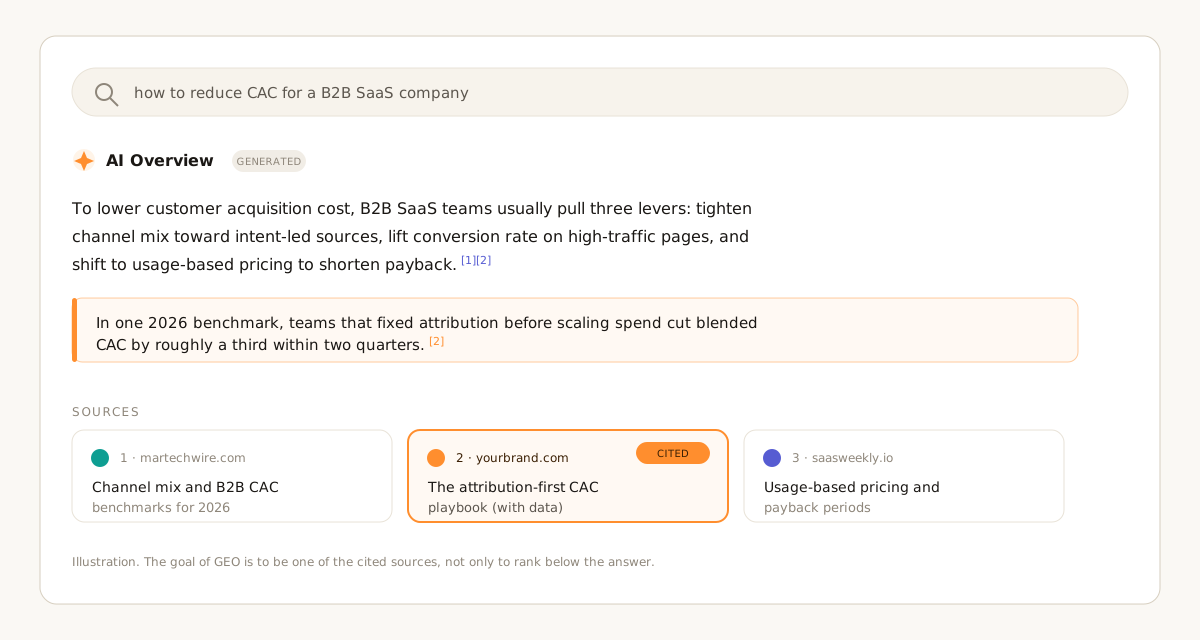
Structured data is still worth keeping. Google says it is not required for the AI features, but it remains useful for rich results and for making your entities unambiguous, which is its own kind of help; their structured data intro is the reference. One more technical detail worth knowing: AI Overviews and AI Mode use a query fan-out technique, issuing several related searches across subtopics and then assembling supporting pages. You are not optimizing for one query anymore. You are trying to be the obvious source across a cluster of them.
What the research says works
The most cited work here is the Princeton GEO paper, Aggarwal et al., presented at KDD 2024. The headline is that GEO methods can lift a page’s visibility in generative engine responses by up to 40 percent. More useful than the headline are the specifics of which edits moved the needle, measured on their GEO-bench benchmark:
- Adding citations to external sources produced the largest gains, up to roughly 115 percent more visibility for lower-ranked content.
- Adding statistics lifted visibility by around 41 percent.
- Adding quotations from relevant sources lifted it by around 28 percent.
- Keyword stuffing, the old reflex, did essentially nothing for AI visibility.
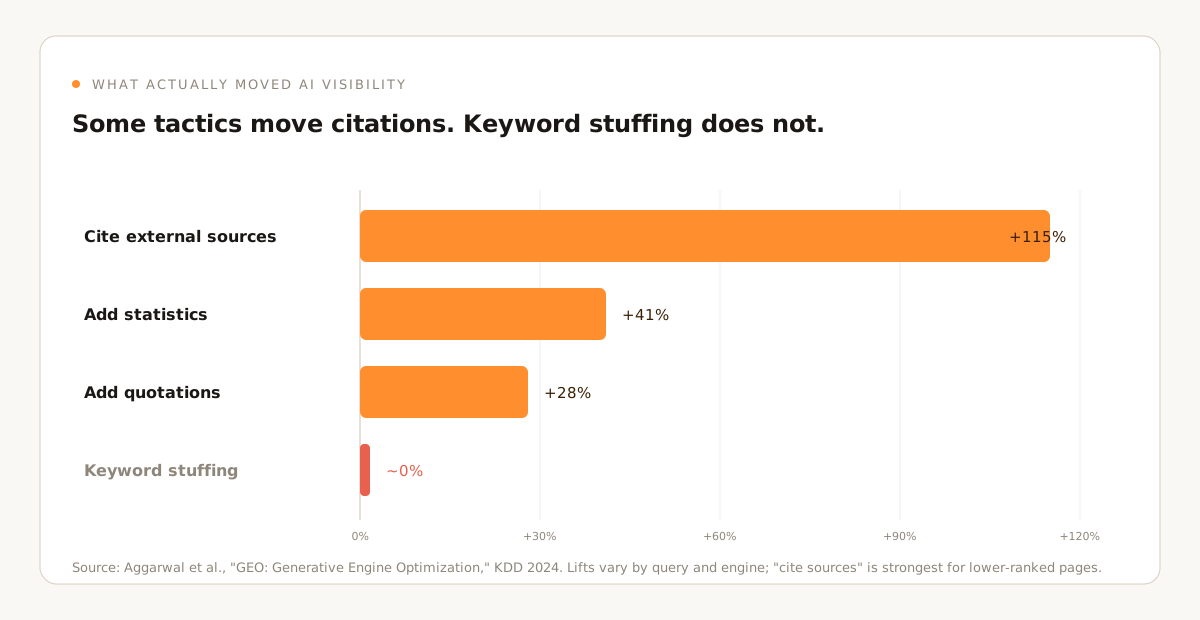
Notice the through-line. Every winning tactic makes your content easier to verify and quote. That is the whole game. An answer engine is assembling a trustworthy, attributable response, and it reaches for sources that hand it clean, sourced, quotable facts.
The pattern: be the most quotable source on the page
Translate the research into how you actually write:
- Answer first. Put a direct, self-contained answer in the first 40 to 60 words under each heading, before the context and the storytelling. The engine often lifts that span more or less verbatim.
- Keep facts dense and sourced. Use real numbers and attribute them. A sentence with a figure and a credible source is far more liftable than a paragraph of adjectives.
- Make entities unambiguous. Name the thing, define it, and use consistent terminology so the engine knows what you are an authority on.
- Structure for extraction. Clear headings, short definitions, lists and an honest FAQ give the model clean blocks to quote.
Platforms reward slightly different things
Once your fundamentals are sound, the engines diverge a little. In practice we see ChatGPT favor encyclopedic, well-structured explainers, Perplexity reward recency and clearly sourced detail, and Google’s AI Overviews lean on pages that already rank well in classic search. The common denominator is still clarity and citability, so we optimize for that first and tune for individual engines second.
How to measure it without fooling yourself
You cannot manage what you do not look at, so look directly. Ask the questions your content should answer inside ChatGPT, Perplexity and Google’s AI features, and note whether you are cited, how you are described, and who is cited instead of you. Do it on a schedule for a fixed set of priority prompts. It is unglamorous, and it is the most honest signal available while dedicated tracking matures.
What we would not waste time on
- Special AI files as a magic switch. Google has said plainly that no special AI text file or markup is required. Add structured data because it helps rich results and clarity, not because someone promised it guarantees citations.
- Keyword stuffing. The research is clear that it does nothing for AI visibility, and it makes your prose worse for humans too.
- Chasing every engine quirk. Get genuinely quotable first. The platform-specific tuning is a rounding error next to that.
The takeaway: GEO is not a trick layered on top of SEO. It is the discipline of being the clearest, most verifiable, most quotable source on your topic. Do that, and the citations follow, on Google and everywhere else.
This is the discipline our SEO, GEO and AEO services apply on every client site.
Sources
The Peax Brief
One sharp idea on data-driven growth, every other week. No spam, unsubscribe anytime.