 Digital Peax


In an A/B test for one of our clients in online travel, making listing images 50px taller on mobile came with up to 12% more visitors reaching the booking engine.
Small changes deserve a test
On a phone, the photo is the first thing people use to judge a hotel. Our client's listing cards showed fairly short images, so we made them 50px taller on mobile. Most teams would ship a tweak like this without a second thought, or skip it as too small to matter. Both are guesses, so we tested it instead.
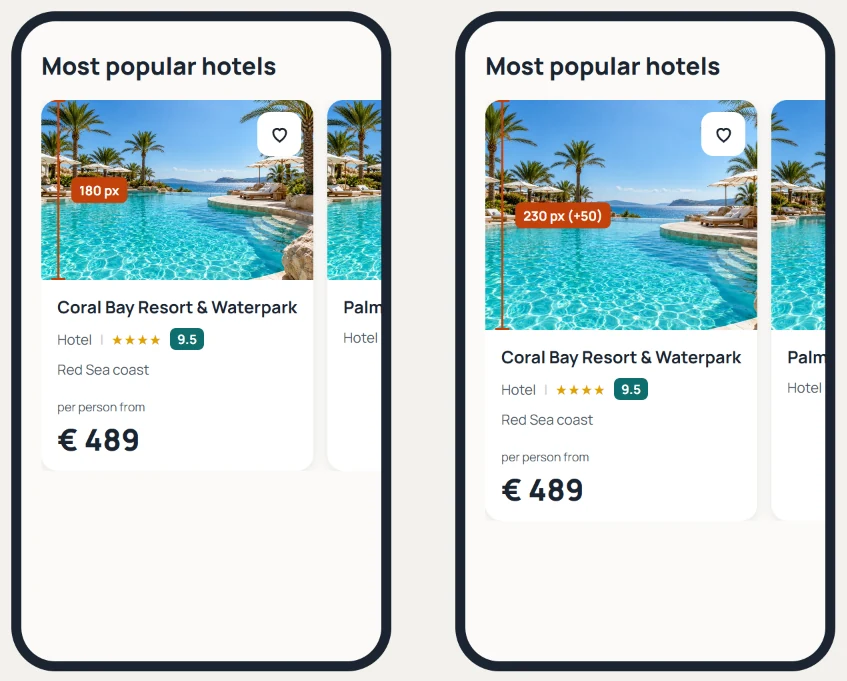
How we tested it
We split mobile traffic 50/50 between the original cards and the taller images. The test ran long enough to reach a solid sample on mobile. We measured every step of the funnel: listing page, accommodation page, booking engine and booking.
What changed
Every mobile step toward the booking engine moved up with the taller images.
| Funnel step (mobile) | Original | Taller images | Change |
|---|---|---|---|
| Homepage → booking engine | 7.69% | 8.63% | +12.2% |
| Listing page → booking engine | 8.53% | 9.08% | +6.4% |
| All visitors → booking engine | 4.44% | 4.64% | +4.5% |
The direction of these lifts is consistent across the funnel. The change is now live on mobile.
Why this matters
Small UI details are not small in effect, and the only way to know their size is to test them.
- Test the "obvious" tweaks. A 50px change cost almost nothing to build, yet it lifted every mobile step toward booking.
- Measure the whole funnel. One topline number can hide where a change actually helps.
- Segment by device. What works on a small screen may not work on a large one.
At Digital Peax, this is how we run CRO: test small changes, measure every funnel step, and decide with data. If you want to know which small changes could move your numbers, get in touch. For the measurement side of testing, see our piece on attribution and holdout tests.