 Digital Peax
 ChatGPT Ads went live across Europe, and the launch terms are the story
 By
By 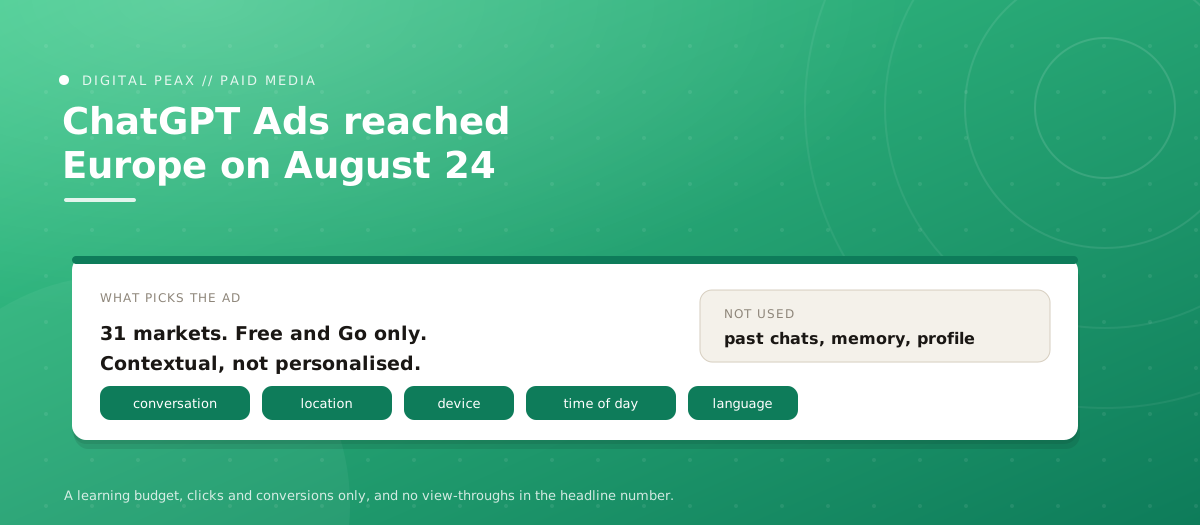
On August 24 ads started appearing inside ChatGPT across 31 European markets. The headline is the reach. The part that decides whether this is a channel you can plan for is the launch terms: free and Go tiers only, ads chosen from the conversation in front of the user rather than from anything OpenAI knows about them, and buying that still runs through a person at OpenAI rather than a self-serve login.
We have written about ChatGPT Ads twice already this year, first as an early field report and then when automatic advanced matching arrived with a deadline attached. Both times the honest conclusion was the same: interesting, US-only, too small to plan around. The European launch is the first change that makes a different answer possible, so it is worth being precise about what actually shipped.
What went live
Ads are now serving in 31 European markets, an EEA-plus-Switzerland footprint that includes Germany, France, Spain, Italy, the Netherlands, Austria, Sweden, Norway and Denmark (Search Engine Land, OpenAI). Confirm your specific market against OpenAI's published list before you tell a client they can buy it. Turkey, to state the obvious thing our own clients will ask first, is not part of an EEA rollout, and nothing announced this month changes that.
The audience is unchanged from the US pilot in the way that matters most for planning. Ads show only to logged-in adults on the Free tier and on the Go plan, which sells in Europe at 7.99 euros a month. Plus, Pro, Business, Enterprise and Education subscribers see nothing. The placement rules are also unchanged: ads sit below the end of a response, are labelled as sponsored, are visually separated from the answer, and per OpenAI do not influence the answer itself (OpenAI, OpenAI Help Center).
The targeting is the story, and it is smaller than people expect
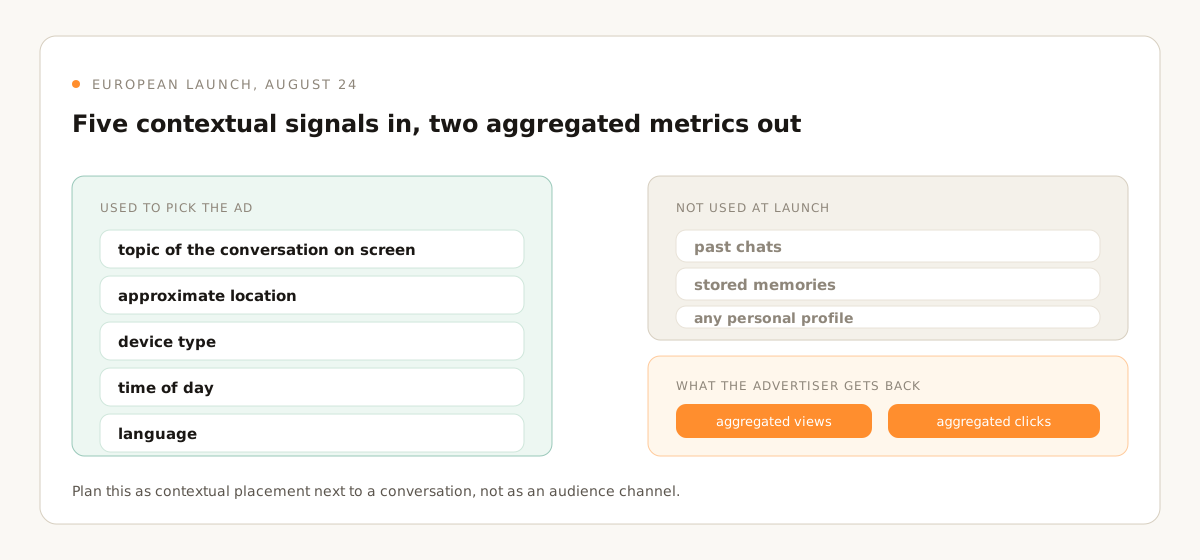
At launch these ads are explicitly not personalised. The selection signals are the topic of the conversation currently on screen, approximate location, device type, time of day and language. Past chats and stored memories are not used. OpenAI relies on legitimate interest under the GDPR as the lawful basis for this generic, contextual advertising. It can defend that position because the targeting is so thin.
There is a user control, and it is worth understanding before a client asks. Opting out changes which ads someone sees, not whether they see ads. This will get press coverage in Europe, so read it once now rather than improvising an answer later.
The Digital Services Act obligations sit on top: online platforms must label advertising and provide information on who placed an ad and why it was shown. In practice this means your brand's presence in a ChatGPT answer is a matter of public record in a way a Meta placement in 2018 was not. So review the creative and any claims before launch, not after a screenshot goes around.
Buying it is still a conversation, not a login
Access in the opening phase runs through OpenAI's Ads Solutions team, through agency partners, or through technology partners. Self-serve booking in Ads Manager is expected to follow but is not the launch state. For most agencies this means the practical first step is registering interest at openai.com/advertisers and getting into the queue, not planning a September flight.
Two platform details landed alongside the expansion and both matter for how a test gets judged. Bidding is now automated by default in new ad groups through a Maximize results strategy, which sets and adjusts bids toward a chosen goal of clicks or conversions to get the largest result count inside the budget. And targeting now separates iOS app, Android app and web, while reporting still rolls up into two buckets, so your platform split will be finer than your ability to read it.
The measurement trap to set your rules against now
View-through conversion reporting has arrived with a window fixed at one day. Usefully, OpenAI has kept it out of the machinery: view-throughs are excluded from bidding, from billing and from the reported cost per acquisition. That is the right design. It is also the thing everyone forgets by the second week of a test, when a dashboard shows a conversion count with view-throughs folded in and the channel looks twice as good as it is.
Write your measurement rules before the first impression serves. Judge the test on clicks and on conversions that survive your normal attribution, treat one-day view-through as a directional signal about exposure, and never put a blended number in a client deck without saying which figures are in it. This is the same discipline we argued for in measuring AI-search traffic, and a brand-new channel with a one-day view-through window is exactly where it earns its keep.
So is it worth a budget yet
A channel becomes testable when three things exist: a way to bid toward an outcome, a way to measure that outcome, and enough reach to gather data. Europe just supplied the third, automated bidding supplies the first, and the second is now adequate if you are careful about view-throughs. That is the threshold for a learning budget, not for a line item you defend as a core channel.
Two honest cautions on fit. The audience is people who have not paid for ChatGPT, so if a client sells to exactly the professionals most likely to be on Plus or a Business seat, the addressable audience here is thin. And the intent quality is not paid search: this is contextual inventory next to a conversation, closer in spirit to a good social placement than to a bottom-of-funnel query. Brief the creative that way: one clear offer, not a comparison-shopping ad.
The strategic reason to look now is not the reach. It is that a second large assistant is monetising alongside Google's ads in AI Mode and AI Overviews, and the surfaces where people ask questions are fragmenting faster than anyone's channel plan. A small test you have run beats a strong opinion you have not tested.
The line to hold: contextual inventory, free-tier audience, managed buying, view-throughs that do not count. Test it with money you would be comfortable writing off, and decide the measurement rules before the first impression.
What to do this week
- Check the market list against your client roster before anything else. A campaign you cannot legally or practically buy in your client's country is not a plan, and the 31-market footprint does not cover everywhere you sell.
- Decide fit per client, in writing. If the buyer is a paid-tier professional, say so and stop there. The free-and-Go audience is a real filter, not a detail.
- Register interest at openai.com/advertisers now if any client passes that filter. Managed access means the queue, not the launch date, is your constraint.
- Set the measurement rules before you get access: clicks and attributed conversions decide the test, one-day view-through is directional only, and no blended number goes in a client report without a note on what is in it.
- Add AI assistant ad surfaces as one standing line in the quarterly channel review, covering ChatGPT, AI Mode and AI Overviews together. Reviewing them one launch at a time is how a channel plan falls behind.
New channels are cheap to learn and expensive to catch up on. Deciding which clients should spend a test budget here, and which should be told to wait, is the sort of call our performance marketing team makes every quarter.
Sources
- OpenAI: ChatGPT Ads expands across Europe
- Search Engine Land: ChatGPT Ads are expanding to 31 European countries
- OpenAI: Testing ads in ChatGPT
- OpenAI Help Center: Ads in ChatGPT
- PPC Land: ChatGPT Ads makes automated bidding the default in new ad groups
- PPC Land: ChatGPT Ads gains 3-platform targeting as reporting stays at 2 buckets
The Peax Brief
One sharp idea on data-driven growth, every other week. No spam, unsubscribe anytime.