 Digital Peax
 The first-party data setup for a cookieless web
 By
By 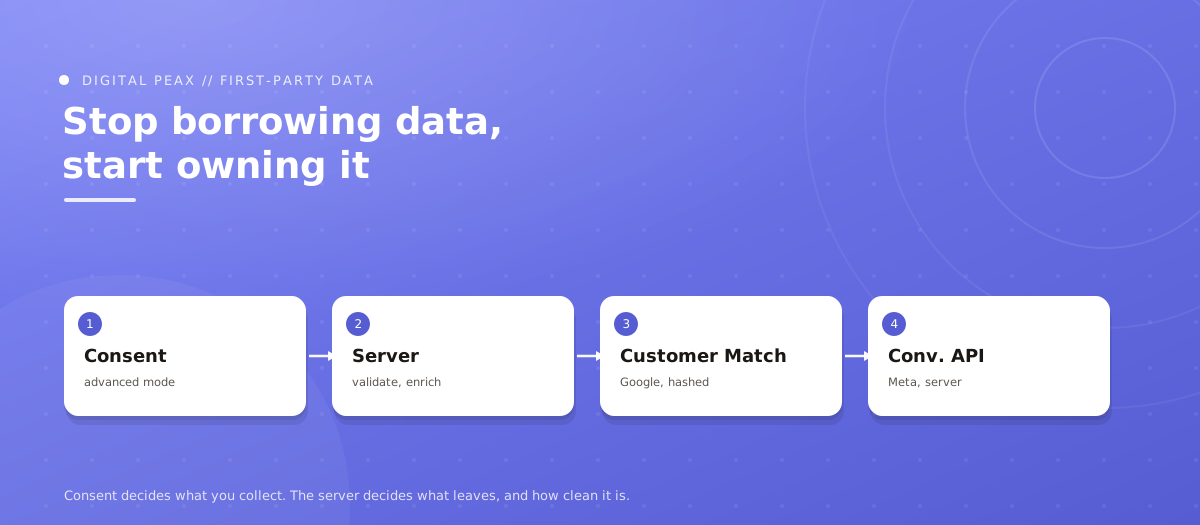
Third-party cookies spent years on death row, got a last-minute reprieve, and still lost their grip. Between browser tracking protections, consent banners, and Apple’s privacy changes, the data you can borrow about a user keeps shrinking. The durable answer is not a clever workaround. It is owning the data: first-party signals you collect with consent and feed back to the platforms yourself. We build a specific setup for that, and this is it.
For years the plan was simple to describe: Chrome would switch off third-party cookies and everyone would scramble. The reality turned out messier. Google has repeatedly changed its plans for third-party cookies, and they have not vanished on a single clean date. Reading that as "panic over, carry on" is a mistake. Safari and Firefox already block them, consent banners cut into what fires at all, and platform signal loss is a present-tense problem. The teams that are calm about it are the ones who stopped borrowing data and started owning it.
First-party data, defined plainly
First-party data is what your customers give you, on your surfaces, with their consent: an email at checkout, a phone number on a lead form, on-site behaviour, purchase history. It is more accurate than anything inferred from a borrowed cookie, it does not evaporate when a browser tightens up, and, handled correctly, it is exactly what the ad platforms now want you to feed them. The whole setup below is just the discipline of collecting it cleanly and putting it to work.
Step one: consent that keeps signal
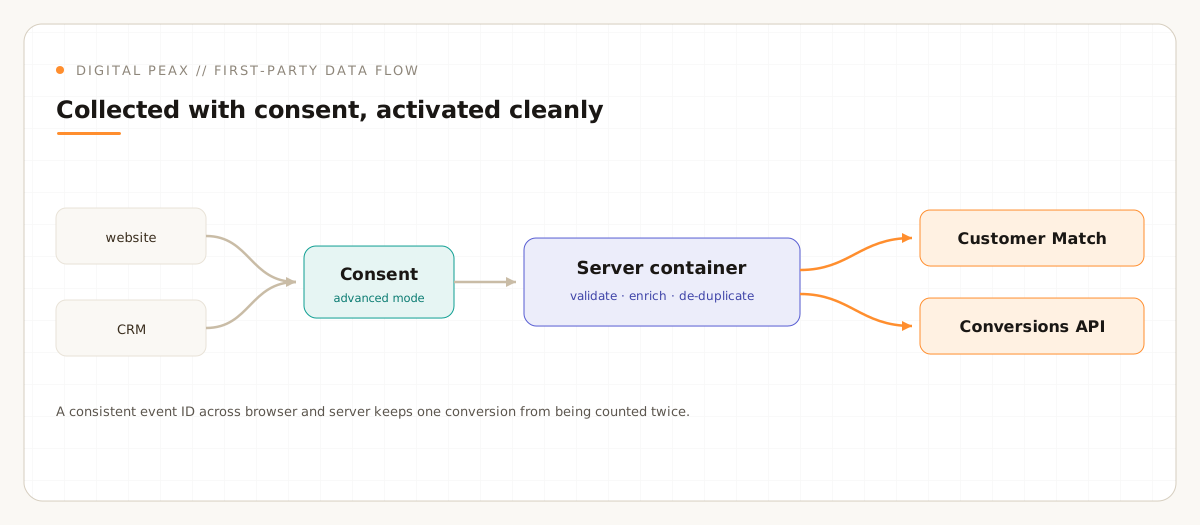
This is the part teams skip and later regret. In the EU especially, the consent banner is not a legal sticker on top of analytics; it decides how much data you ever collect. Google's Consent Mode has two modes, and the choice is consequential: in basic mode, tags are blocked entirely until consent, and everyone who declines is simply gone; in advanced mode, tags load and send cookieless pings while consent is denied, which is what lets Google model the behaviour you would otherwise lose. Get this right first, because every downstream signal depends on how much you legitimately collect here. We go deep on it in Consent Mode v2 without nuking your data.
Step two: put your data to work
Owned data is only an asset once it is doing something. Two mechanisms turn a consented list into durable targeting and measurement:
- Customer Match (Google). Upload hashed first-party data to reach and re-engage known customers across Search, YouTube, Gmail and Display. Google positions it explicitly as a tool that keeps working as the web moves away from cookies. The hashing means you share a match key, not raw identities.
- Conversions API (Meta). Instead of relying on the browser pixel alone, which ad blockers, tracking prevention and consent can all break, the Conversions API sends conversions server-to-server from your systems to Meta. It is more robust, and it can include events the browser never sees, like an offline sale or a CRM stage change.
Both rely on the same raw material: clean, consented, well-identified first-party events. Neither rescues you if the collection underneath is a mess.
Step three: the server-side plumbing
Server-side tagging is what makes the whole thing trustworthy. Running tags in a first-party server container means the conversion data takes a durable first-party path instead of a fragile browser one, and it gives you a single place to validate, de-duplicate, and enrich events before they reach Google or Meta: attaching a margin to an order, or a lead score to a sign-up, data you would never expose in the browser. It is not free; someone has to run and pay for the container. We lay out exactly when it earns that cost in what server-side tracking fixes and what it does not.
De-duplication is not optional
The moment you send conversions from both the browser and the server, you risk counting each one twice. Every server-side setup has to pass a consistent event ID so the platform can match the browser event to the server event and keep a single conversion. Skip it and you hand the bidding algorithms inflated numbers, which is worse than collecting less, because now the machine is optimising confidently toward a lie.
Stop borrowing data you cannot keep and start owning data you can. Consent decides what you collect, the server decides what leaves, and Customer Match and the Conversions API are where it pays off.
The build, step by step
- Wire Consent Mode in advanced mode first, so declined traffic still leaves a modelled signal.
- Make first-party collection deliberate: capture the email, the phone, the value, at the moment of consent.
- Route everything through a server-side container to validate, enrich, and de-duplicate.
- Activate it with Customer Match and the Conversions API, with consistent event IDs throughout.
- Reconcile the numbers, browser, server, and platform, before you trust them for bidding.
Notice that none of it waits on a cookie-deprecation date that keeps moving. It is simply more durable, more accurate, and more defensible than borrowing signal you were always going to lose. Wiring this up cleanly, consent through server-side plumbing, is exactly the kind of build our analytics services handle for clients.
Sources
The Peax Brief
One sharp idea on data-driven growth, every other week. No spam, unsubscribe anytime.