
Running Performance Max and Advantage+ without losing control
 By
By 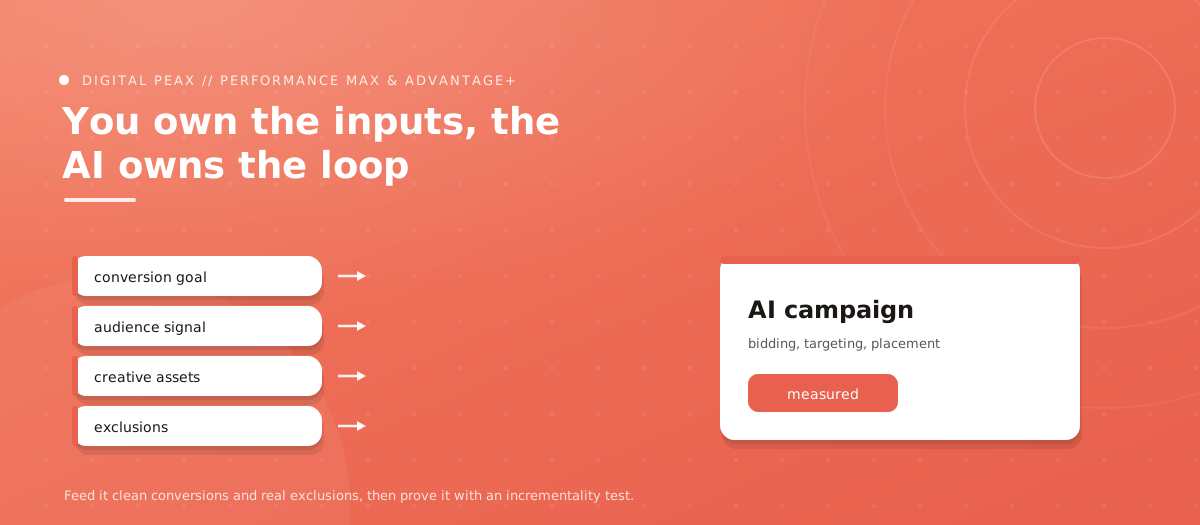
Performance Max and Advantage+ ask you to hand targeting, bidding, and placements to Google and Meta and trust the machine. Done blindly, that is how budget quietly drains into branded search you would have won anyway and placements you would never have bought. Done well, it is the most efficient media you can run. The difference is entirely in the inputs and the guardrails. What follows is how we keep agentic campaigns honest.
Google's Performance Max and Meta's Advantage+ campaigns are built on the same bargain: give up the manual controls, and the AI will optimise targeting, bidding, and placement better than you can by hand. The bargain is often worth taking. But "set and forget" is the version that goes wrong. The marketer's job does not disappear. It moves. You stop adjusting bids by the hour and start doing something harder: feeding the system inputs good enough that its decisions are good, and fencing it in so it cannot spend where it should not.
What you actually still control
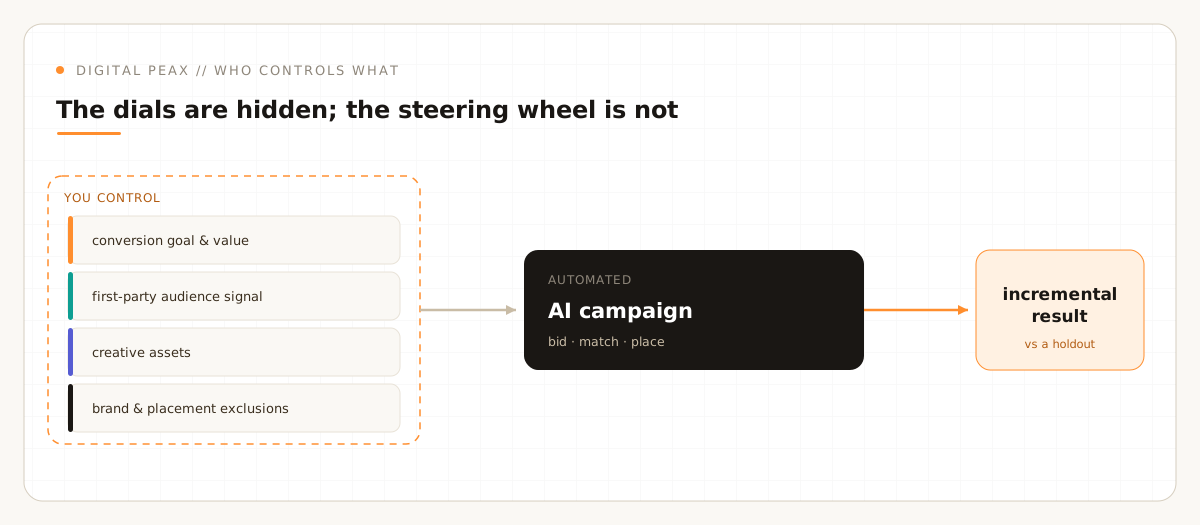
Agentic campaigns hide the dials, not the steering wheel. Four inputs still belong entirely to you, and they decide almost everything about the outcome.
- The goal and conversion data. The campaign optimises toward whatever you tell it is valuable. Point it at a clean, meaningful conversion (a real lead, or a sale with a value), and it learns the right thing. Point it at a soft event and it will earnestly buy you more soft events.
- The audience signal. Both platforms let you seed the system. Performance Max takes audience signals; Meta's Advantage+ audience takes suggestions it then expands from. This is your first-party data's moment to matter.
- The creative. You supply the text, images, and video. On an automated placement, the asset is the message and, increasingly, the targeting. The system shows each creative to whoever responds to it.
- The exclusions. Brand lists, placement exclusions, and negative signals are how you stop the machine wasting money. They are easy to skip and expensive to forget.
The brand-traffic trap
The most common way Performance Max flatters itself is by absorbing your branded search. People who were going to type your name anyway get served a Performance Max ad, convert, and the campaign reports a gorgeous ROAS for traffic you already owned. It looks like the AI is a genius. It is mostly taking credit. Push for brand exclusions where the platform allows them, watch the share of conversions coming from obviously branded queries, and treat a suspiciously high ROAS as a question, not a victory.
Feed it data it can trust
An automated campaign is only as good as the conversion signal underneath it, and in a world of consent banners and disappearing cookies that signal is leakier than it used to be. This is where measurement and media meet: clean key events, server-side tagging, and a durable conversion feed are what let the bidding AI optimise toward reality instead of a sample. Bid to value, not just volume, so the system learns that a high-margin order is worth more than a cheap one. We cover that plumbing in what server-side tracking fixes and what it does not.
New tools, same scrutiny
Google keeps extending this model. AI Max for Search campaigns brings the same automated matching and asset optimisation into search, and Google reports that advertisers who switch it on typically see "14% more conversions or conversion value at a similar CPA or ROAS." That is Google's own figure, and it is a reason to test, not a guarantee to bank. The discipline is identical whatever the feature is called: turn it on as an experiment, give it good inputs, and measure it against what you were doing before.
Hold a slice back
The honest test of any AI campaign is incrementality. Because these campaigns mix prospecting and remarketing across every placement Google or Meta owns, their reported conversions include people who would have bought regardless. The only way to separate the work the campaign did from the credit it claims is a holdout: withhold the campaign from a comparable slice of audience or geography and compare. If the exposed group does not beat the holdout, the impressive dashboard is measuring demand you already had.
The job did not disappear, it moved: you cannot out-click the algorithm any more, but you can out-think it. The inputs, the exclusions, and the holdout are the work now.
Running one in practice
- Point optimisation at a clean, valuable conversion, and bid to value where you can.
- Seed real first-party audience signals instead of leaving the system to guess.
- Add brand and placement exclusions before launch, not after the waste shows up.
- Watch the branded-traffic share so Performance Max is not just reselling your own demand.
- Run a holdout before scaling, and judge the campaign on incremental conversions.
Used like this, these campaigns are not a black box you surrender to. They are a very fast junior buyer that follows instructions literally, which means the quality of the instructions, and the fence around them, is the whole game. Feeding and fencing those instructions is core to how our performance marketing agency runs Performance Max and Advantage+ for clients.
Sources
The Peax Brief
One sharp idea on data-driven growth, every other week. No spam, unsubscribe anytime.