 Digital Peax
 Google is enforcing your CPA targets now, and your best campaigns are the exposed ones
 By
By 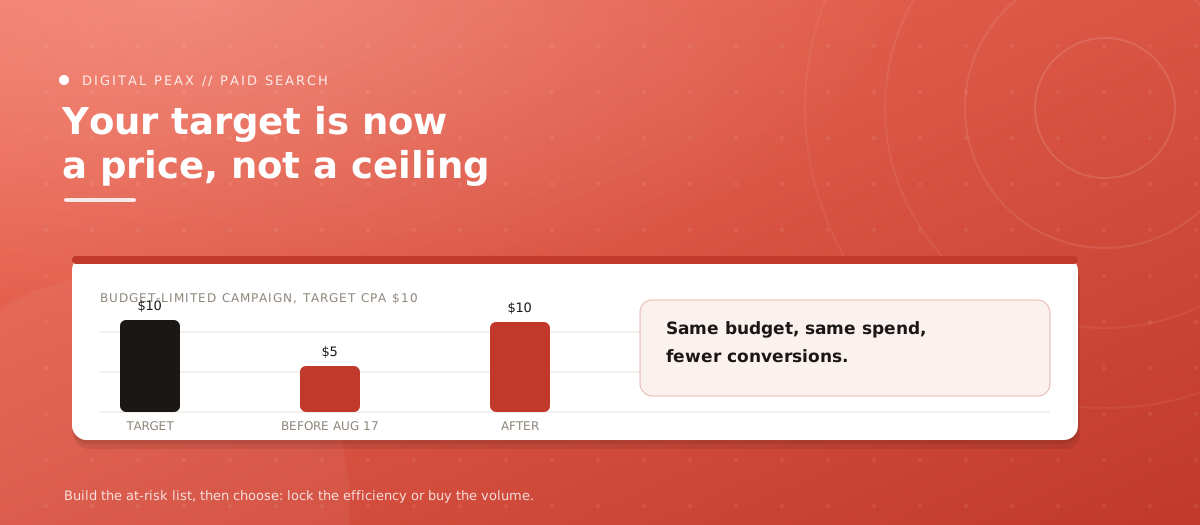
Since August 17 Google has been holding budget-limited campaigns to the Target CPA and Target ROAS you set, instead of letting them beat it. If you manage accounts where Smart Bidding has quietly been coming in under target for a year, those are not your safest campaigns any more. They are the exposed ones, and the size of the exposure is exactly the size of the gap you have been enjoying.
The mechanic is simple and Google states it plainly: campaigns that are limited by budget and use a target-based bid strategy will now perform more consistently toward the bid target, including when you make budget adjustments (Google Ads Help). The example in Google's own documentation is the one that should make you open your accounts: if a campaign's Target CPA is $10 but recent actual CPA performance is $5, that campaign will deliver more closely to a $10 actual CPA from August 17, 2026 (Search Engine Journal).
The direction of this is easy to get backwards. Nothing is being taken away from campaigns that were struggling. What is ending is overperformance, and only campaigns that were doing well had any of that.
Why the good accounts are the exposed ones
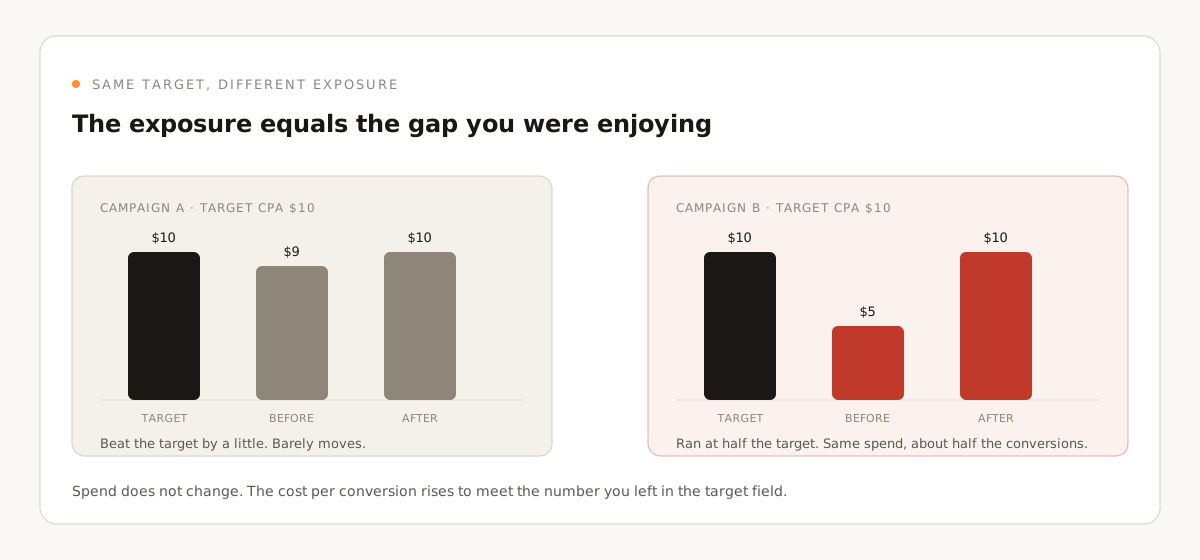
Here is how the gap got there in most accounts, and it is not anyone's mistake. You set a Target CPA at a number you were confident you could live with, which is to say a ceiling rather than a goal. Smart Bidding, constrained by a budget that ran out every afternoon, spent that budget on the cheapest available conversions and came in well under the ceiling. The results looked good, so nobody touched the target. Two quarters later the target says $10, the account says $5, and the number in the target field no longer describes a decision anyone made.
That gap is what the change closes. Google's argument is that a target should mean what it says, and that a campaign delivering against its stated target scales more predictably when you move budget around. The argument is fair. It is only uncomfortable because in real accounts the stated target and the price you are willing to pay drifted apart a long time ago.
Exactly who is in scope
The change applies to Target CPA and Target ROAS across Search, Shopping, Performance Max, Demand Gen and Travel, and reaches Search Ads 360 as well as Demand Gen campaigns in Display & Video 360. Target CPC is included for Demand Gen only. App, Video Reach and Video View campaigns are excluded, and so are Manual CPC, Target Impression Share and Target CPM, which are not target-based strategies in this sense (Search Engine Land).
The qualifier that decides everything is limited by budget. A campaign that is not budget-constrained does not behave differently after August 17. That one condition turns this from a platform-wide event into a short audit. In most portfolios the affected set is a small minority of campaigns, and you can build the list in about twenty minutes.
One detail worth knowing when you go looking. Google's own notifications about this change went to advertisers with campaigns that were limited by budget at some point in the last twelve months, not only campaigns limited by budget today. If you are building your at-risk list from a single week of status, you will under-count it.
Google is not going to fix this for you
This is the part that gets missed in the summaries. Google has said explicitly that it will not automatically adjust your targets or your budgets. The behavior change is automatic; the response is not. If you do nothing, the default outcome is that spend stays roughly flat, cost per conversion rises toward the target, and conversion volume at the same budget falls.
The tool Google built for the response, the Bid Target Adjustment Tool, has been live since July 6. It surfaces the campaign's historical performance and gives you three options: keep the target as it is, match it to recent actual performance, or set a custom target of your own. It saves you some clicks. It does not tell you what the right number is, and the third option is the one most accounts should be using.
The decision is a goal question, not a bidding question
For every at-risk campaign there are two coherent answers and one incoherent one.
Lock in the efficiency. Lower the target so it sits just above recent actual performance, leaving enough headroom that the system is not fighting the constraint. You keep roughly the CPA you had. You should expect the campaign to stay budget-limited and volume to stay roughly where it was. Choose this when the account's constraint is genuinely the budget and the efficiency is what the client is buying.
Buy the volume. Leave the target where it is and raise the budget until the campaign is no longer limited by budget. This removes the campaign from the change's scope altogether, and you find out what that stated target was actually worth in volume terms. Choose this when there is demand you have been leaving on the table and the target genuinely reflects what a conversion is worth to the business.
The third option, and the bad one, is to leave both the target and the budget alone and then treat the CPA rise as a performance problem. It is not a performance problem. The account is doing what the settings always told it to do.
What nobody can tell you
Google has described an intent, not published a per-campaign forecast, and there is no published model for how far a given campaign moves or how fast. What is reasonable to say is that the movement scales with the gap: a campaign that beat its target by a few percent will barely register the change, and a campaign that spent a year at half its target has the most room to drift. Anyone quoting a client a specific expected CPA increase is guessing.
Give it time before you judge, too. One to two conversion cycles is the honest watch period, and a single week of post-change data on a campaign with twenty conversions a month tells you nothing. Resist the urge to make a second change while you are still waiting to read the first.
The rule in one line: your Target CPA is now a price, not a ceiling. Go and check that every number in that field is one you would choose to pay today.
What to do this week
- Build the at-risk list first. Filter for campaigns using Target CPA or Target ROAS that have been limited by budget at any point in the last twelve months, then sort by the gap between the target and the 90-day actual. The widest gaps are the whole story.
- Decide lock-efficiency or buy-volume per campaign, in writing, before you touch a setting. The decision follows the account's goal, not a default, and the note you write now is what makes the CPA change explainable in October.
- Where you are lowering targets, leave headroom above recent actual rather than pinning the target exactly to it. A target set to the last 30 days of a good month is a target you will be raising again in three weeks.
- Tell affected clients now, in one sentence, before the numbers move. A CPA rise you predicted is a platform change; the same rise discovered in a monthly report is a performance problem you failed to spot.
- Hold everything else still for one to two conversion cycles. No simultaneous budget shifts, no structural changes, no AI Max migration work in the same campaigns in the same week, or you will not be able to attribute anything you see.
The settings take minutes. The work is knowing which twenty campaigns out of four hundred matter, and making the call on each one. That is what our performance marketing team is for. It is the same point we made about the numbers you feed the machine: the target is an instruction, and Google has started following it literally.
Sources
- Google Ads Help: Changes to target based bid strategies
- Google Ads Help: Frequently asked questions about changes to target-based bid strategies
- Search Engine Journal: Google is ending target overperformance, what to fix before August 17
- Search Engine Land: Google Ads updates target-based bidding for budget-limited campaigns
- Search Engine Roundtable: Google Ads changes bidding for campaigns limited by budget
- Optmyzr: Google's August 17 bidding change, what advertisers need to do now
The Peax Brief
One sharp idea on data-driven growth, every other week. No spam, unsubscribe anytime.