 Digital Peax
 Why your ROAS is lying to you, and how to fix attribution
 By
By 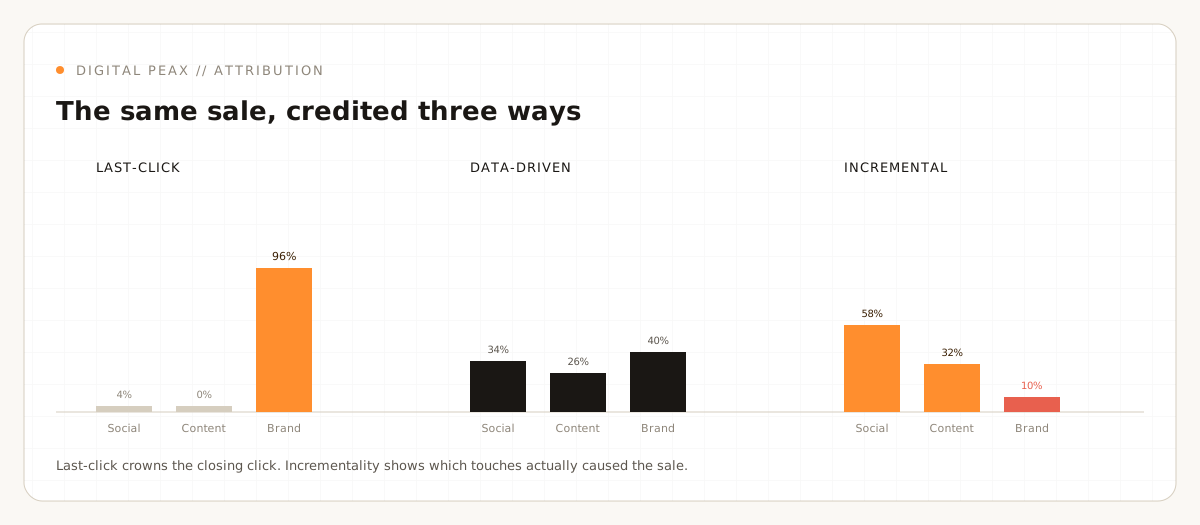
Open any ad platform and it will proudly report a return on ad spend that makes you look like a genius. Most of the time, that number is borrowing credit it did not earn. We will get into why last-click ROAS misleads, and the two things we do on client accounts to measure what spend is actually driving growth.
ROAS is not misleading because the maths is wrong. It is misleading because of what feeds it: attribution. The platform decides which touchpoints get credit for a sale, and the default answer, almost everywhere, flatters the channel doing the reporting.
The last-click problem, in one example
Picture a typical purchase. Someone sees a paid social ad on Monday, reads a blog post on Wednesday, then on Friday searches your brand name, clicks the brand ad, and buys. Last-click attribution hands all of that sale to the brand search ad. The social ad and the content that created the demand get nothing. Last-click credits the final touchpoint and ignores the journey that made it happen.
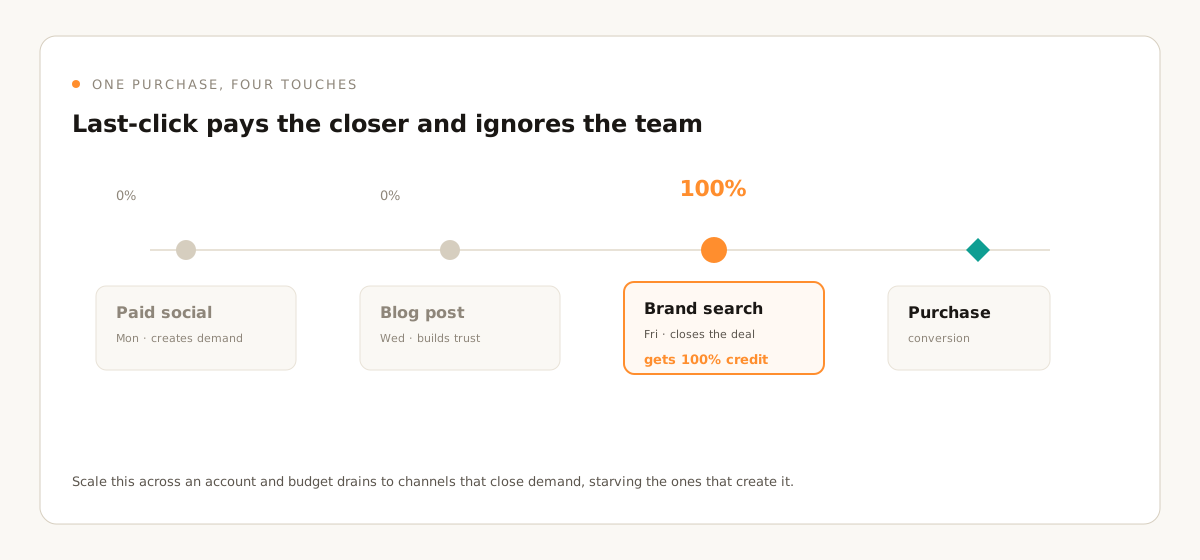
Scale that across an account and the distortion is brutal. Branded search looks unbeatable, prospecting looks weak, and budget drains toward the channels that close demand rather than the ones that create it. You optimize straight into a dead end.
Fix one: stop using last-click as your model
The first fix is the cheap one. In GA4, Google retired the first-click, linear, position-based and time-decay models back in 2023 and made data-driven attribution the default. You can confirm and change this in attribution settings. Data-driven attribution distributes credit across touchpoints using your own conversion patterns rather than a blunt rule. It is not perfect, but it is a strictly better starting point than last-click.
This matters because the model you choose changes the ROAS you report, which changes the budget you move. Two teams looking at the same account under last-click versus data-driven will reach different conclusions about which campaigns to scale. Pick the better model before you argue about the numbers.
Fix two: prove it with incrementality
Attribution, however clever, still only divides up the conversions you observed. It cannot tell you what would have happened anyway. That question, the one that actually matters, is answered by incrementality testing.
Google’s own version is Conversion Lift. As Google’s documentation describes it, you split your audience into a treatment group that can see your ads and a control group that cannot, then measure the difference in conversions between them. The gap is the lift: the conversions that exist only because the ads ran. Google reports it as incremental cost per action (iCPA) and incremental return on ad spend (iROAS).
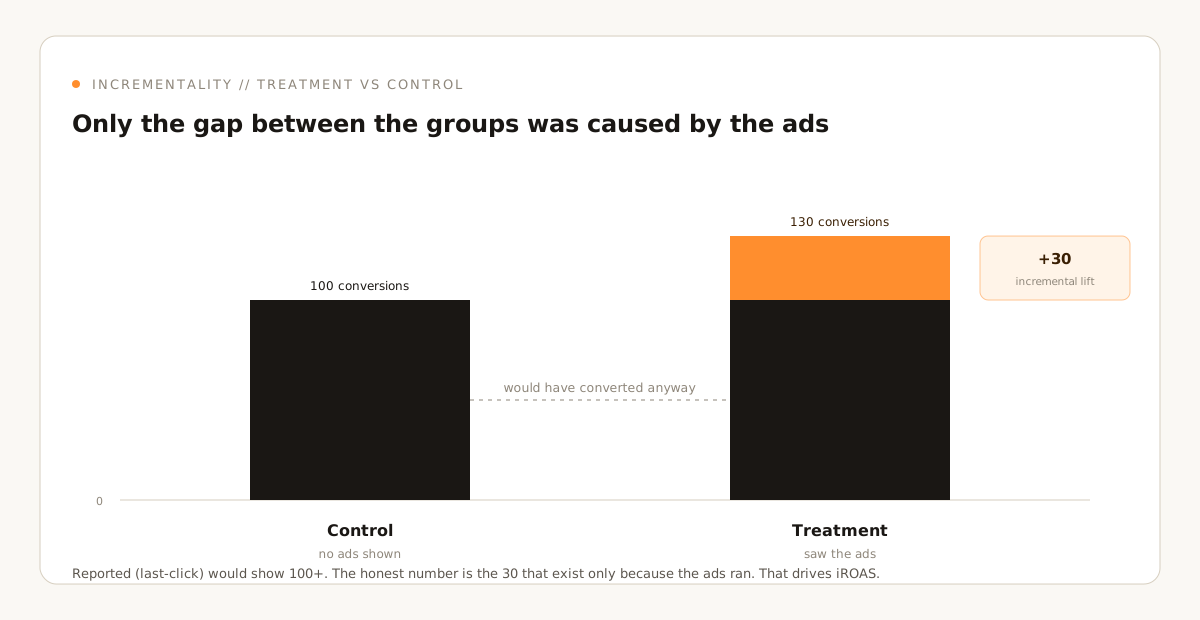
You do not always need the platform’s tool. A geo holdout works on the same logic: run the campaign in one set of similar regions, hold it back in another, and compare. It is the cleanest way to test channels like branded search, where the results regularly surprise people. It is common to find that a large share of branded search conversions are non-incremental, meaning those people would have bought without the ad. We have seen it firsthand, and it is always an uncomfortable but useful meeting.
Incrementality used to be gated behind very large budgets. That is changing. Google has been lowering the minimum spend for its advanced lift tests, from figures around 100,000 dollars down toward 5,000 dollars per experiment, which finally puts causal measurement within reach of mid-sized advertisers.
Attribution versus incrementality: attribution tells you who to thank for the conversions you got; incrementality tells you which conversions you actually caused. You need the second one to set a budget.
How we run it on an account
- Set GA4 and Google Ads to data-driven attribution, and stop quoting last-click ROAS in reports.
- Pick the one or two channels you most suspect of stealing credit, usually branded search and retargeting, and design a holdout for them.
- Run the test long enough to reach significance, then rebuild the budget around incremental return, not reported return.
- Re-test on a cadence. Incrementality is not a one-time audit; it drifts as your mix and market change.
None of this makes the dashboards lie less on their own. It changes which number you trust. When a client asks why we moved budget out of a campaign with a 6x reported ROAS, the answer is simple: the incremental ROAS was barely above one, and we are paid to grow the business, not the dashboard. Running that discipline, data-driven attribution plus incrementality testing, is core to our analytics services.
Sources
The Peax Brief
One sharp idea on data-driven growth, every other week. No spam, unsubscribe anytime.